Ratio Edibles Explained: What Do 1:1, 2:1 and 5:1 Mean?

Browse the CBD and wellness section of any California dispensary and you will quickly run into a specific kind of labeling that looks almost like a sports score. A gummy labeled 2:1, another labeled 1:1, and sometimes something like 5:1 or even 1:1:1. If you are not sure what those numbers actually mean, you are not alone, and understanding them is one of the more useful skills you can pick up as a cannabis consumer, especially if you are trying to find a product with a specific, predictable feel rather than just a strong high.

This guide breaks down exactly what ratio edibles are, what the numbers on the label actually represent, what the current science says about how these combinations behave in the body, and how to choose a ratio that matches what you are actually looking for.


What a Ratio Actually Means on an Edible Label

A ratio on a cannabis product label describes the relative amount of two or more cannabinoids in that product, most commonly THC and CBD. The first number in the ratio typically refers to CBD, and the second refers to THC, though this convention can vary slightly by brand, which is exactly why checking the actual milligram breakdown on the label matters more than memorizing which number comes first.

A 1:1 product contains roughly equal amounts of CBD and THC. A 2:1 product contains twice as much CBD as THC. A 5:1 product contains five times as much CBD as THC, making it a much lower intoxication, higher CBD leaning option. Ratios can also extend beyond just two cannabinoids, as seen in products labeled something like 1:1:1, which typically indicates three cannabinoids present in roughly equal parts, commonly THC, CBD, and a third compound like CBN for sleep focused formulas.


Ratio Edibles Explained: What Do 1:1, 2:1 and 5:1 Mean?


Why Ratios Exist in the First Place

Straight THC edibles deliver a single, often unpredictable intoxicating experience, especially for consumers who are sensitive to anxiety or overwhelming highs at higher doses. CBD, by contrast, is non intoxicating on its own and has been associated with calming, relaxing effects in many consumers. Combining the two in a specific, labeled ratio gives consumers a way to dial in roughly how intoxicating a product will feel before ever trying it, rather than guessing based on THC percentage alone.

This is part of why ratio products have become such a significant part of the wellness category rather than the traditional recreational one. A consumer looking for functional relief, whether that is stress, minor discomfort, or better sleep, may prefer a lower intoxication ratio like 5:1, while someone looking for a milder but still noticeably euphoric experience might prefer a 1:1 or 2:1 product instead.


What the Science Actually Says About CBD and THC Ratios

Here is where an honest answer gets a little more complicated than the marketing around ratio products sometimes suggests. The commonly repeated idea is that CBD reliably softens or moderates THC's psychoactive effects, which is part of the reasoning behind lower ratio products marketed as gentler experiences. The actual clinical research on this question, however, is genuinely mixed.

Some studies have found that CBD can reduce certain THC induced effects at specific ratios, while other more recent, carefully controlled research has found the opposite. A study conducted at Leiden University in the Netherlands administered THC alongside varying doses of CBD and found that CBD did not reduce THC's subjective, psychomotor, or cognitive effects. At the highest CBD dose tested, THC's psychoactive effects were actually significantly increased rather than diminished, an outcome the researchers attributed to CBD interfering with how the body metabolizes THC rather than any calming interaction between the two compounds. You can review the study details directly through this published research summary.

This does not mean ratio products do not work as intended for many people, since individual responses to cannabinoids vary considerably and plenty of consumers do report a milder, more manageable experience with CBD forward ratios. It does mean the relationship between CBD and THC is more complicated than a simple dial you can turn in one predictable direction, and it is worth approaching ratio products with realistic expectations rather than assuming a specific ratio guarantees a specific feeling.


Common Ratios and What They Generally Offer

With that scientific nuance in mind, here is a general breakdown of what different ratios tend to offer in practice, based on how they are typically formulated and marketed.

1:1 Ratio

Roughly equal parts CBD and THC. This is one of the most popular balanced ratios, often marketed for consumers who want a noticeable but more moderate experience than a straight THC product, potentially with a calmer, less anxious feeling for some users. WYLD's Blood Orange 1:1 Gummies are a widely available example of this balanced format.

2:1 Ratio

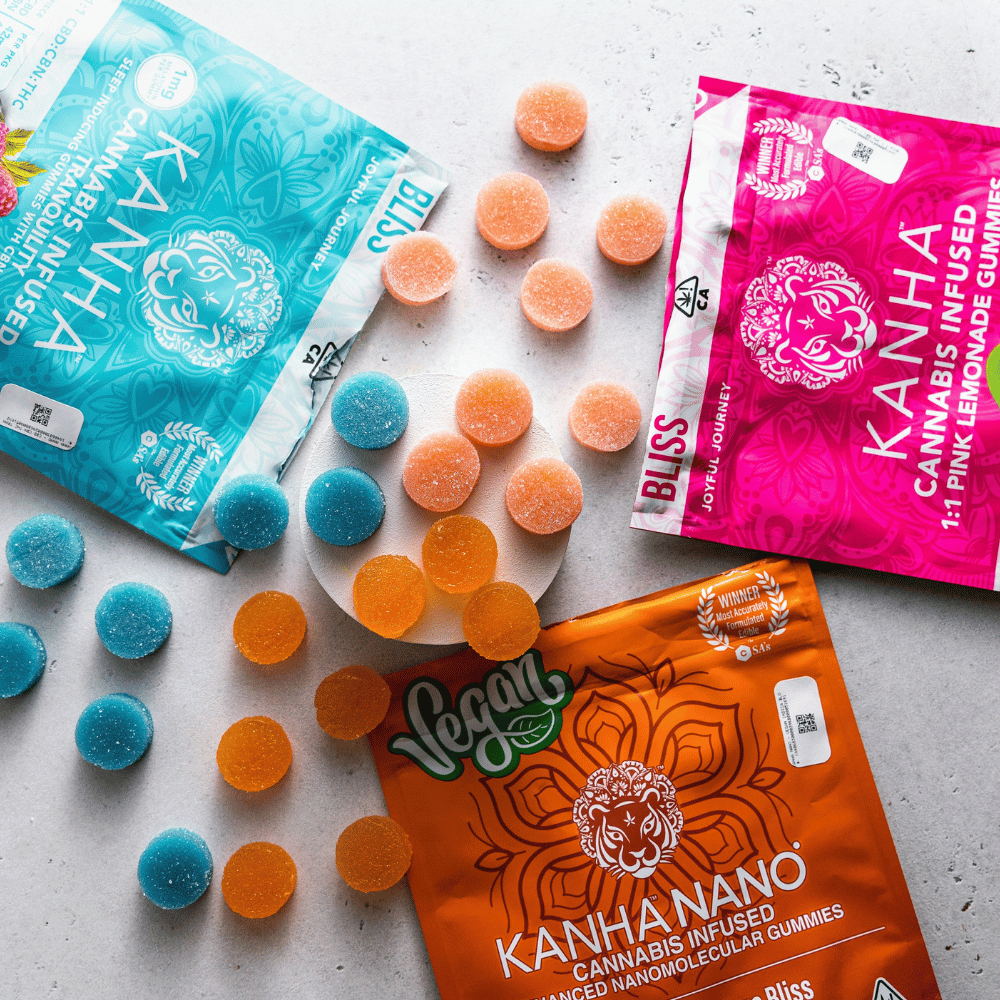
Twice as much CBD as THC. This ratio is commonly marketed toward consumers looking for functional relief, such as everyday stress or minor discomfort, with a milder intoxicating effect than a 1:1 product while still including a meaningful THC dose. Kanha's Acai Blueberry 2:1 Restore Gummies are one example built around this recovery focused ratio. Our CBD and cannabis wellness guide covers where 2:1 style products fit within the broader wellness category if you want more context on functional cannabinoid blends generally.

5:1 and Higher CBD Leaning Ratios

Five times as much CBD as THC, or more in some products. These are generally marketed toward consumers who want the lowest possible intoxicating effect while still including a small, functional amount of THC, often for daytime use or for consumers who are especially sensitive to THC's psychoactive effects.

1:1:1 and Other Three Cannabinoid Blends

Products combining three cannabinoids in roughly equal parts, frequently THC, CBD, and CBN, are typically formulated with a specific functional goal in mind, most commonly sleep. Kanha's Blue Raspberry Tranquility Sleep Gummies are a good example of this three cannabinoid, sleep oriented format. Our CBN sleep cannabinoid guide breaks down what CBN specifically contributes to these blended formulas and what the current research says about its own effects.


How to Choose the Right Ratio for You

A few practical questions can help narrow down which ratio makes sense for your goals.

Start With What You Actually Want

If you want a noticeably intoxicating experience with a potentially calmer edge, a 1:1 ratio is a reasonable starting point. If you want functional relief with only a mild, easy to manage psychoactive effect, a 2:1 or 5:1 ratio leaning toward CBD is likely a better fit. If sleep specifically is your goal, a blend incorporating CBN alongside THC and CBD is worth exploring.

Consider Your Sensitivity to THC

Consumers who are especially sensitive to THC's anxious or overwhelming effects at higher doses may prefer higher CBD ratios simply because they include less total THC per serving, not necessarily because the CBD is reliably counteracting the THC that is present.

Read the Milligram Breakdown, Not Just the Ratio

A 1:1 product could contain 5 milligrams of CBD and 5 milligrams of THC, or it could contain 50 milligrams of each. The ratio tells you the relative proportion, but the actual milligram amounts determine the real strength of the product, so always check both numbers before deciding on a dose. Our edibles dosing guide walks through how to think about milligram based dosing more broadly if ratio labeling still feels confusing.

Give Yourself Room to Adjust

Because individual responses to CBD and THC combinations vary so much, and because the underlying science is still evolving, it is worth treating your first experience with any new ratio as an experiment rather than a guaranteed outcome. Starting with a lower total milligram dose within your chosen ratio gives you room to adjust upward on future purchases if the effect feels milder than expected.


Ratio Edibles Explained: What Do 1:1, 2:1 and 5:1 Mean?


Reading a Ratio Product Label

California requires lab testing on every cannabis product sold at a licensed dispensary, and the label should tell you exactly what a ratio product actually contains. Look for the specific milligram breakdown of each cannabinoid listed in the ratio, not just the ratio itself, along with confirmation of current batch testing for potency accuracy and contaminants. If a third cannabinoid like CBN is included, confirm its specific milligram amount as well, since blended products can vary significantly in how much of each compound they actually contain despite similar sounding ratio labels.


Final Thoughts

Ratio edibles give consumers a genuinely useful way to shop by intended effect rather than raw THC percentage alone, and understanding what those numbers mean is a real, practical skill for navigating the wellness aisle. At the same time, the science behind exactly how CBD and THC interact is still evolving and, in some studies, has produced results that cut against the common assumption that CBD simply softens THC's effects. Approaching ratio products with genuine curiosity, checking the actual milligram breakdown rather than relying on the ratio alone, and giving yourself room to adjust based on your own experience will serve you better than assuming any specific ratio guarantees a specific feeling.

For a full breakdown of the cannabinoids and product types behind the wellness category, our complete CBD and cannabis wellness guide covers everything this article builds on.

Ready to explore ratio products for yourself? Browse our full CBD and wellness selection to find a ratio and cannabinoid blend that fits what you are looking for.

FAQ

Jenna Renz

Jenna is a California-based creative copywriter who’s been lucky enough to have worked with a diverse range of clients before settling into the cannabis industry to explore her two greatest passions: writing and weed.

  • Social media icon

Related Blogs

How Long Do Edibles Take to Kick In? (The Honest, Science-Backed Answer)

How Long Do Edibles Take to Kick In? (The Honest, Science-Backed Answer)

If you have ever eaten a cannabis gummy, felt nothing after twenty minutes, and wondered whether you got a dud, you are far from alone. The single most common mistake new and even experienced edibles consumers make comes down to one simple misunderstanding: edibles do not work on the same timeline as smoking or vaping, and treating them like they do is how most uncomfortable experiences happen.

8 Min Sep 22, 2026Jenna Renz

What Are Solventless Rosin Pre-Rolls and Are They Worth the Price?

What Are Solventless Rosin Pre-Rolls and Are They Worth the Price?

Scan the pre-roll section of any California dispensary and you will notice a clear price tier at the top of the shelf. A three dollar classic joint sits next to a rosin coated pre-roll that can cost three or four times as much for a similar sized product. For plenty of consumers, that gap raises an obvious question. What is actually different about a solventless rosin pre-roll, and does it justify the extra cost?

8 Min Sep 22, 2026Jenna Renz