Rewards


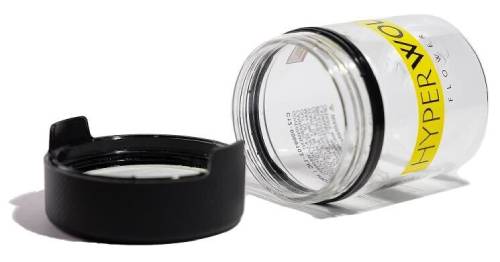
Microdosing cannabis is the easiest way to get the benefits without getting bulldozed by the buzz. Think of it like salt: a pinch makes dinner better; dumping the whole shaker makes you regret your life choices.
This guide is built for working professionals, newcomers, and anyone who wants functional relief with minimal impairment. You will learn what “microdose” actually means, how to pick the right format, how to dose precisely (hello, 2.5mg), and how to build a routine you can trust.
And yes, we are going to say the quiet part out loud: most “bad weed experiences” are just “too much, too fast, with no plan.”
What “Microdosing” Cannabis Actually Means


Microdosing is taking a very low dose of THC (and sometimes CBD) to achieve subtle, practical effects, such as calmer mood, less pain, or easier sleep, without feeling uncomfortably high.
A useful working definition:
- Microdose range (THC): about 1 to 5 mg
- Common precision step: 2.5 mg THC
- Goal: benefits first, impairment last
Microdosing is not about “not feeling anything.” It is about feeling just enough to function better.
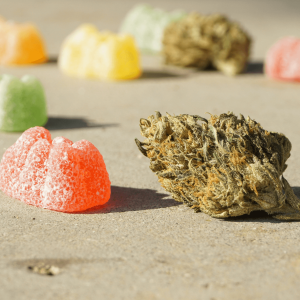
Why Microdose Instead of Just “Taking an Edible”?
Because cannabis is not a light switch. It is a dimmer. Microdosing lets you control the dimmer like an adult.
Microdosing tends to appeal to:
- Newcomers who want a gentle on-ramp
- Working professionals who want calm focus, not couch-lock
- People sensitive to THC who still want benefits
- Anyone who hates surprise and prefers repeatable results
It also plays nicely with modern precision products. HyperWolf-style precision dosing is basically the opposite of the “my friend gave me a mystery gummy” approach. You want consistency. You want repeatability. You want to know exactly what you took.
What the Research Suggests (And What It Doesn’t)
Cannabis research is still catching up to real-world use, but clinical and observational research suggests that low doses of cannabinoids may help some people with:
- Anxiety and stress reduction (at low doses; higher doses can worsen anxiety in some people)
- Pain management (especially when pairing THC with CBD)
- Sleep improvement (often by reducing stress, discomfort, or rumination)
The key phrase is “low doses.” THC can show a biphasic effect, meaning:
- Low dose: can feel calming or stabilizing
- High dose: can feel anxious, sedating, dizzy, or mentally “too loud”
So if you want “functional,” microdosing is the smart bet.
Important reality check: cannabis is not a cure-all, and it is not equally effective for everyone. Microdosing is a strategy to reduce risk while you learn what works for your body.
Start Here: The 1 to 5 mg Microdosing Range (No Charts, Just Clarity)
Use this as a practical starting framework. Your perfect dose is the one that helps you and still lets you do your life.
1 mg THC
- Best for: very sensitive users, true beginners, daytime “toe-dip”
- What it may feel like: subtle mood shift, slight easing of tension
- Why it works: you can learn without getting spooked
2 to 2.5 mg THC
- Best for: most beginners, functional daytime support
- What it may feel like: calmer baseline, smoother social energy, mild body relief
- Why it works: 2.5 mg is a common precision unit, especially with low-dose edibles and tinctures
3 to 4 mg THC
- Best for: people who want more noticeable relief but still want to stay sharp
- What it may feel like: stronger body comfort, more pronounced calm
- Watch-outs: this is where “a little high” may start showing up, depending on tolerance
5 mg THC
- Best for: experienced microdosers, evening use, sleep support
- What it may feel like: clearer psychoactive effect, more sedation for some
- Watch-outs: for many newcomers, 5 mg is no longer “micro.” It can be a full experience.
If you are new, start at 1 to 2.5 mg THC, then adjust slowly.
THC vs. CBD: The Two-Ingredient Strategy
Microdosing often works best when you stop treating THC like the only character in the story.
THC (microdose hero, microdose villain)
- Pros: pain relief, mood lift, sleep support, appetite support
- Cons: can cause anxiety, racing thoughts, impairment at higher doses
CBD (stability and padding)
- Pros: may reduce THC-induced anxiety, supports calm without intoxication
- Cons: can be subtle; dose response varies widely
Many people do well with:
- Low THC + moderate CBD for daytime calm
- Low to moderate THC + CBD for pain
- THC (low) + CBD + bedtime routine for sleep
If THC makes you anxious, do not “power through.” Add CBD, lower THC, or both.
Product Format Face-Off: Tinctures vs. Gummies vs. Flower
If you care about precision, formats matter. A lot.
Tinctures (best for precision dosing)
Why professionals love tinctures: You can dial in small doses like 1 mg or 2.5 mg without committing to a whole edible.
- Onset: usually 15 to 45 minutes (sublingual), longer if swallowed
- Duration: 3 to 6 hours (often)
- Precision: excellent, especially with measured droppers
- Best for: consistent daily routines, “I need exactly 2.5 mg” people, newcomers who fear edibles
How to use tinctures for microdosing:
- Start with a low dose (like 1 to 2.5 mg THC).
- Hold under tongue 30 to 60 seconds.
- Wait at least 60 to 90 minutes before adjusting, especially at first.
Gummies and low-dose edibles (convenient, consistent, slow)
Low-dose edibles are the “set it and forget it” option. If they come in 2.5 mg pieces, even better. Breakable, repeatable, no math gymnastics.
- Onset: 45 to 120 minutes
- Duration: 4 to 8 hours (sometimes longer)
- Precision: very good if labeled clearly, especially at 2.5 mg
- Best for: evening stress relief, sleep routines, people who want the easiest path
Edible rule you must follow:
- Take your dose.
- Wait at least 2 hours before taking more. Repetition for emphasis: Wait. Two. Hours.
However, it’s important to remember that while these products offer various benefits and conveniences, cannabis use can have long-term health impacts.
Flower (harder to microdose precisely, but fast feedback)
Smoking or vaping flower provides rapid onset, which can help you “find” your minimum effective dose quickly. But precision is trickier because puff size, potency, and device all change the outcome.
- Onset: 1 to 10 minutes
- Duration: 1 to 3 hours
- Precision: moderate to low unless you are very consistent
- Best for: experienced users, fast relief needs, people who want immediate feedback
If you microdose flower:
- Take one small puff.
- Wait 10 to 15 minutes.
- Decide if you need another puff. Do not treat it like popcorn.
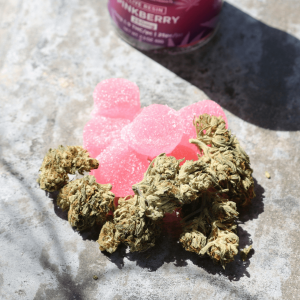
Why 2.5 mg Is the Sweet Spot for Precision
A 2.5 mg THC dose is popular because it sits in the middle of “barely there” and “oops, I have a meeting.” This dosage is also a practical unit:
- easy to repeat
- easy to adjust up or down
- often available in low-dose edibles
- easy to measure with many tinctures
If you want to build a reliable routine, 2.5 mg products are a smart place to live. You can refer to this weed dosage chart for more insights on dosing.
And if you want convenience, choose formats that support same-day delivery so you can actually stick to the plan. Precision dosing is a lot easier when your products show up when you need them.
Use-Case Scenarios (Real Life, Not Fantasy)
Below are functional microdosing scenarios. Adjust based on your body, your tolerance, and your responsibilities.
Scenario 1: “I want calmer workdays, not a head change”
- Best format: tincture or 2.5 mg edible
- Starting dose: 1 to 2.5 mg THC, optionally paired with CBD
- Timing: morning or early afternoon
- Pro tip: avoid experimenting right before big meetings. Your calendar does not care about your wellness journey.
Scenario 2: “I get anxious easily, but I still want relief”
- Best format: tincture for fine control
- Starting dose: 1 mg THC or even THC-free CBD first
- Strategy: add CBD, keep THC low, increase slowly
- Pro tip: caffeine plus a too-high THC dose can feel like your nervous system doing parkour.
Scenario 3: “My back hurts, but I need to function”
- Best format: tincture for daytime, edible for evening
- Starting dose: 2 to 2.5 mg THC, consider CBD alongside
- Timing: dose when you can monitor effects for a few hours
- Pro tip: track how pain changes, not just how high you feel. Relief is the point.
Scenario 4: “I fall asleep fine, but I wake up at 3 a.m.”
- Best format: low-dose edible (longer duration)
- Starting dose: 2.5 mg THC (or 1 to 2.5 mg if sensitive)
- Timing: 1 to 2 hours before bed
- Pro tip: if you feel groggy in the morning, reduce dose or dose earlier.
Scenario 5: “I want social ease without being noticeably high”
- Best format: tincture or 2.5 mg edible
- Starting dose: 1 to 2.5 mg THC
- Timing: 60 to 90 minutes before social time (edibles may need longer)
- Pro tip: do not stack doses quickly. That is how you become “the quiet one” in the corner thinking about time.
The Golden Rules of Microdosing Cannabis (Memorize These)
- Start low.
- Go slow.
- Change one thing at a time.
Yes, that is repetition. It is also how you avoid chaos.
More rules that save people:
- Do not microdose for the first time on a day with high stakes.
- Do not mix with alcohol if your goal is “functional.”
- Eat a small meal if edibles hit you too hard.
- Hydrate. Low-tech solutions still work.
- If you get uncomfortable, stop dosing, breathe, and wait it out. Most “too high” experiences fade with time.
How to Find Your Minimum Effective Dose (Step-by-Step)
You are not chasing intensity. You are chasing enough.
Step 1: Pick one format for your first week
If precision is the priority, pick a tincture or low-dose edible.
Step 2: Choose a starting dose
- Newcomers: 1 mg THC (or 2.5 mg if you are comfortable and cautious)
- Sensitive users: start at 1 mg or consider CBD-first
Step 3: Set a consistent test window
Try the same dose at the same time of day for 2 to 3 sessions. Your body likes patterns.
Step 4: Track 3 things only
Keep it simple:
- Anxiety/stress (0 to 10)
- Pain/discomfort (0 to 10)
- Sleep quality (0 to 10)
Step 5: Adjust slowly
If you need more effect:
- Increase by 1 mg (or 2.5 mg maximum) after you have tested the current dose a few times.
If you get impairment:
- Reduce dose next time.
- Or switch formats (tincture often gives better control).
Microdosing Schedules That Actually Make Sense
You do not need to microdose all day like it is your new hobby. Use cannabis like a tool.
Here are workable schedules:
“As-needed” microdosing
- Use when symptoms flare (stress spike, pain day, travel anxiety)
- Best for: people who do not want daily use
- Risk: inconsistent results if you never learn your dose
“Weekday functional” schedule
- Microdose on workdays only
- Best for: professionals who want routine
- Tip: keep your dose low enough that you do not second-guess emails
“Evening reset” schedule
- Microdose after work to unwind
- Best for: stress, sleep, end-of-day pain
- Tip: low-dose edibles are great here, because you are not racing a meeting
“Sleep support” schedule
- Microdose 1 to 2 hours before bed
- Best for: falling asleep, staying asleep
- Tip: do not increase dose just because you had one bad night
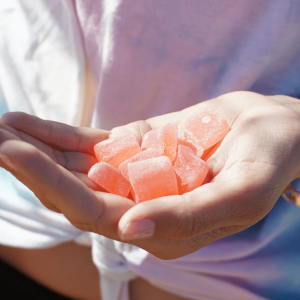
Common Mistakes (A Comedy of Errors, Starring Everyone)
Mistake 1: Treating 10 mg like a “starter dose”
For many people, 10 mg THC is not gentle. It is an event. Start lower.
Mistake 2: Redosing edibles too soon
The edible hasn’t kicked in, so you take more. Then it kicks in. Then the second dose kicks in. Then you meet the universe.
Wait. Two. Hours.
Mistake 3: Assuming “more” equals “better”
With THC, “more” can mean “worse.” Especially for anxiety.
Mistake 4: Switching products constantly
New gummy today, new vape tomorrow, mystery tincture next week. That is not microdosing. That is speed dating your endocannabinoid system.
Mistake 5: Ignoring CBD (when you need it most)
If THC feels sharp or edgy, CBD can soften the experience for many users. Consider pairing.
Safety, Impairment, and Adult Responsibilities
Let’s keep this crisp:
- Do not drive or operate machinery if you feel impaired.
- Be extra cautious with edibles. Duration can be long.
- Keep products away from kids and pets.
- If you have a medical condition, are pregnant/breastfeeding, or take medications (especially sedatives), talk to a qualified clinician before using cannabis.
- If you have a history of psychosis or are at risk, THC may be contraindicated. Do not wing this.
Microdosing is about control. Act like it.
Why HyperWolf Fits Microdosing So Well (Precision, Not Guesswork)
If your goal is functional relief without impairment, you need two things:
- predictable low-dose products
- fast, reliable access so you can stay consistent
That is why relying on HyperWolf as a go-to source for precision dosing makes sense. Microdosing thrives on 2.5 mg products, tinctures, and low-dose edibles that are easy to repeat, easy to adjust, and simple to fit into real life. Same-day delivery (where available) is not just convenient. It supports adherence, consistency, and smarter experimentation.
Pick the format that matches your life:
- Want fine control? Choose tinctures.
- Want convenience and consistency? Choose 2.5 mg edibles.
- Want fast feedback? Use flower carefully, one puff at a time.
Precision is the whole point. Keep it precise.
FAQ: Microdosing Cannabis
What is a microdose of cannabis?
A microdose is typically 1 to 5 mg of THC, often with the goal of subtle benefits like calmer mood, less pain, or improved sleep without strong intoxication.
Is 5 mg THC considered microdosing?
Sometimes. For many beginners, 5 mg can feel fairly strong, especially in edible form. If you are new, start lower (1 to 2.5 mg).
What does 2.5 mg THC feel like?
For many people, 2.5 mg feels mildly calming, slightly uplifting, or gently relaxing with minimal impairment. Effects vary by tolerance, body size, metabolism, and product type.
What’s better for microdosing: tinctures or gummies?
Tinctures usually win for precision and adjustable dosing. Gummies/edibles win for convenience and consistency, but they take longer to kick in and last longer.
How long does a microdose edible take to kick in?
Usually 45 to 120 minutes. Do not redose early. Wait at least 2 hours before taking more.
Can microdosing cannabis help with anxiety?
Low doses may help some people feel calmer, and some research suggests cannabinoids can reduce anxiety at low doses. But higher THC doses can worsen anxiety for some users. Start low, consider adding CBD, and increase slowly.
Can microdosing help with pain?
Many people report pain relief from low-dose THC, especially when paired with CBD. The best approach is to start in the 1 to 2.5 mg range and adjust gradually.
Can microdosing help with sleep?
It can. Low-dose edibles may help with falling asleep or staying asleep, often by reducing stress or discomfort. If you feel groggy the next day, reduce the dose or take it earlier.
How often should I microdose cannabis?
It depends on your goal. Some people microdose as needed, others use a weekday routine, and many prefer an evening-only approach. Keep it consistent while you are finding your ideal dose.
Will microdosing show up on a drug test?
Yes, it can. THC may still trigger a positive test even at low doses, especially with repeated use. If testing is a concern, avoid THC products.
Can I microdose and still be productive?
Often, yes, if you keep the dose low and choose a precise format like tinctures or 2.5 mg edibles. Your first few sessions should be on low-stakes days so you can learn your response.
What’s the safest way to start microdosing?
Start with 1 mg THC (or 2.5 mg if you are comfortable), choose a consistent product, wait long enough for effects, track results, and increase slowly. Keep CBD on the table if THC feels too intense.
If you want microdosing to work, make it boring. Make it repeatable. Make it precise. Then let the benefits do the talking.
Jenna Renz

Jenna is a California-based creative copywriter who’s been lucky enough to have worked with a diverse range of clients before settling into the cannabis industry to explore her two greatest passions: writing and weed.