Rewards


Cannabis muscle recovery is no longer just locker-room folklore. It’s a real conversation in sports medicine, rehab clinics, and group chats where someone always says, “Bro, my legs are still destroyed from Tuesday.”
If you train hard, you know the drill. You lift, you sprint, you roll around on a foam roller like a seal on a wet dock, and you still wake up with DOMS that makes stairs feel like a personal attack. So you start looking for recovery tools that actually help: sleep, nutrition, load management, maybe cold plunges, and increasingly, cannabinoids like CBD and THC.
This guide is for the crossover crowd: people who care about performance and aren’t allergic to the cannabis aisle. We’re not talking about getting blitzed before deadlifts. This is about recovery: inflammation, soreness, sleep, and the practical, athlete-friendly ways cannabis and cannabinoids might fit into your routine without wrecking your goals, your drug testing status, or your dignity.
Let’s get into what the science says, what it doesn’t, and how to use cannabis like an adult with a training plan.
The recovery problem athletes actually have (and why it’s complicated)

Muscle recovery isn’t one thing. It’s a messy mix of:
- Delayed onset muscle soreness (DOMS): that 24 to 72-hour “why do I exist” soreness after unfamiliar or high-volume work.
- Inflammation: not inherently bad, but too much or too long can slow return to training.
- Sleep disruption: soreness can reduce sleep quality, and poor sleep slows recovery. Rude cycle.
- Perceived pain and stiffness: what you feel matters because it changes how you move, how you train, and whether you skip the warm-up (don’t).
- Stress and nervous system load: hard training is a stressor. So is life. Your body keeps receipts.
Cannabis enters the chat because cannabinoids can interact with pain signaling, inflammation pathways, mood, and sleep. Not magic. Not useless. Just… complicated.
The endocannabinoid system: your built-in recovery regulator
Your body already produces cannabinoid-like molecules (endocannabinoids) and has receptors built to respond to them. This network is called the endocannabinoid system (ECS), and it helps regulate things athletes care about:
- Pain perception
- Inflammation and immune signaling
- Stress response
- Sleep
- Appetite
Two big receptor types come up a lot:
- CB1 receptors: abundant in the brain and central nervous system. This is where THC does much of its psychoactive work.
- CB2 receptors: more common in immune cells and peripheral tissues. This is where cannabinoids may influence inflammation and immune response.
CBD doesn’t “hit” CB1/CB2 the same way THC does. It acts more like a modulator and interacts with multiple non-cannabinoid targets too (including serotonin-related and TRPV1 channels involved in pain). Translation: CBD is pharmacology with a lot of knobs.
For recovery, the key point is simple: the ECS is involved in pain and inflammation, so cannabinoids might influence how sore you feel and how you bounce back.
Might. Not “will.”
Inflammation: friend, enemy, and sometimes that annoying teammate who won’t leave
Here’s the thing about inflammation: you need some of it.
Training creates microdamage and stress signals that trigger inflammation, which then helps drive adaptation. If you blunt it too hard, too often, you can theoretically interfere with training gains. (This is one reason the “take NSAIDs daily like vitamins” approach is not the move.)
So when people ask, “Does cannabis reduce inflammation?” the better question is:
Can cannabinoids reduce excessive or prolonged inflammation without interfering with adaptation?
We do not have a clean, universal answer yet. But we do have clues:
- Preclinical research (cells/animals) suggests cannabinoids can influence inflammatory signaling.
- Human research is still limited, often focused on chronic pain, neuropathic pain, or medical populations, not healthy athletes chasing hypertrophy.
For DOMS specifically, evidence is early and mixed. Some athletes report meaningful relief. Some feel nothing. Some feel relief mainly because they slept better, not because their quadriceps magically repaired overnight.
And yes, sleep is a recovery superpower. We’ll get there.
What the research says (and what it definitely doesn’t)
Let’s keep this honest and useful.
1) CBD and pain: promising, but athlete-specific evidence is limited
CBD has been studied more than most cannabinoids in recent years, particularly for certain seizure disorders (high-dose pharmaceutical CBD) and for pain/anxiety in various contexts. For exercise-induced muscle soreness, the data is not yet definitive.
Some small studies and athlete-focused investigations suggest CBD may help with perceived soreness and sleep, but findings vary based on dose, timing, and the population studied.
Your takeaway: CBD is plausible for soreness and recovery, but not guaranteed.
2) THC and pain/sleep: effective for some, risky for others
THC has stronger evidence for certain pain conditions and is well-known for its sleep effects. It can help some people fall asleep faster. It can also:
- increase next-day grogginess
- worsen anxiety in some users
- impair coordination and reaction time
- trigger dependency patterns for a minority of people
- reduce REM sleep in some contexts, especially with heavier use
Your takeaway: THC can be a powerful recovery tool for the right athlete at the right time, but it’s the one most likely to backfire.
3) Topicals: popular, low-risk, and often misunderstood
CBD topicals are everywhere, from serious balms to “lavender unicorn recovery glitter.” The science is still evolving, but topicals can be appealing because they’re localized and non-intoxicating.
The big question: do cannabinoids penetrate deeply enough to affect muscle soreness, or are benefits mainly from massage, menthol, and the ritual?
Your takeaway: Topicals can help, especially as part of a recovery routine, but don’t expect them to replace sleep and protein.
4) Athlete leagues and policy: changing fast, but still messy
Pro sports policies around cannabinoids have been shifting. The NFL and other leagues have shown increased openness to research and to reevaluating cannabis-related policies, particularly around pain management alternatives to opioids.
Your takeaway: Culture is moving faster than the science, but the direction is clear.
DOMS: why you’re sore, and where cannabis might fit
DOMS is largely associated with eccentric loading and novel stimulus. Think:
- lowering slowly in a squat
- downhill running
- tempo work
- high-volume negatives
It involves microtrauma, inflammation, and changes in pain sensitivity. That last part matters. DOMS is not just “damage,” it’s also your nervous system turning up the volume on discomfort.
Cannabinoids may help by:
- Reducing pain perception (central and peripheral mechanisms)
- Modulating inflammatory signaling (still being clarified)
- Improving sleep (indirectly improving recovery)
- Reducing stress and muscle tension for some people
If cannabis helps you go from “can’t sit on the toilet” to “I can move normally,” that’s a functional win. But don’t confuse pain relief with full tissue recovery. Feeling better does not always mean you are fully recovered.
Repeat it with me: pain relief is not the same as readiness. Pain relief is not the same as readiness.
CBD vs THC vs “the whole plant”: what athletes should actually choose
CBD: the cautious athlete’s starting point
CBD is popular for a reason. It’s generally non-intoxicating, widely available, and tends to have a calmer side-effect profile.
Best for:
- mild to moderate soreness
- post-training wind-down
- sleep support (especially when stress is the main issue)
- athletes who want minimal cognitive effects
Watch-outs:
- quality varies wildly
- dose matters (and many products are underdosed)
- drug testing risk exists if products contain THC contamination
THC: the heavy hitter (and the riskier one)
THC can be more potent for pain and sleep, but it’s also more likely to cause anxiety, impairment, or dependence patterns.
Best for:
- significant pain that disrupts sleep
- rest days or nighttime use when you’re not driving or training
- experienced users who tolerate it well
Watch-outs:
- intoxication, coordination impairment
- next-day “hangover”
- increased appetite can be a pro or con depending on goals
- anti-doping and workplace drug testing implications
Balanced THC:CBD products: underrated middle ground
Many athletes do best with a balanced ratio (like 1:1 or 2:1 CBD:THC). CBD can reduce some THC side effects for some users, and the combo may offer better symptom relief than either alone for certain people.
Best for:
- sleep + soreness combo
- people who dislike the “too high” feeling
- people who want pain relief without getting launched into space
Watch-outs:
- still contains THC, so testing matters
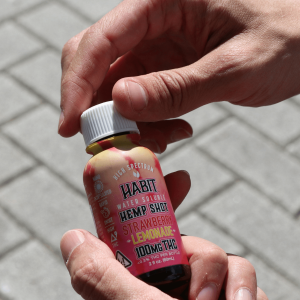
Route of administration: topical vs edible vs tincture vs flower
You don’t just choose cannabinoids. You choose delivery. That changes onset time, duration, side effects, and whether you’ll accidentally text your coach that you love them.
1) CBD topicals (balms, creams, roll-ons)
Use when: soreness is localized (knees, shoulders, quads, low back), you want low systemic effects.
Pros:
- low intoxication risk (even if it contains THC, absorption is typically minimal unless it’s transdermal, but don’t assume)
- easy to target a problem area
- pairs well with massage, mobility, and heat
Cons:
- variable absorption
- benefits may be subtle
- some products are mostly fragrance and vibes
How to use:
- Apply after showering (warm skin helps).
- Massage it in for 60 to 120 seconds. Yes, massage matters.
- Reapply as directed, especially after training or before bed.
2) Tinctures (sublingual oils)
Use when: you want controllable dosing and relatively quick onset.
Typical onset: ~15 to 45 minutes
Duration: ~3 to 6 hours
Pros:
- easier to titrate dose
- less lung irritation than smoking/vaping
- useful for sleep routines
Cons:
- taste can be aggressively botanical
- still varies by product quality
How to use:
- Start low.
- Hold under tongue 60 seconds.
- Wait. Do not re-dose in 10 minutes because “it’s not working.” Patience is a performance skill.
3) Edibles (gummies, capsules)
Use when: you want longer-lasting effects, especially for sleep.
Typical onset: ~45 to 120 minutes
Duration: ~6 to 10+ hours
Pros:
- long duration, great for staying asleep
- consistent if properly dosed
- discreet
Cons:
- easy to overdo
- delayed onset tricks people into taking more
- next-day grogginess risk is higher
How to use:
- Take 1 to 2 hours before bed, not at bedtime.
- Keep dose low, especially with THC.
- If you wake up foggy, reduce dose or move timing earlier.
4) Flower or vape (inhalation)
Use when: you want fast onset for acute discomfort or rapid wind-down.
Typical onset: minutes
Duration: ~2 to 3 hours
Pros:
- fastest feedback loop for dosing
- useful for immediate relaxation
Cons:
- lung irritation and airway inflammation are not a recovery hack
- impairment risk is immediate
- harder to dose precisely
If you care about longevity, consider inhalation the “sometimes tool,” not the foundation.
Product selection by recovery goal (practical, not precious)
Here’s the athlete-friendly way to think about it: choose your recovery target, then choose the cannabinoid and delivery method that matches.
Goal: Reduce mild to moderate DOMS
Try:
- CBD topical after training + before bed
- CBD tincture in the evening
Consider:
- balanced CBD:THC tincture if CBD alone isn’t cutting it
Goal: Sleep deeper (the actual recovery multiplier)
Try:
- CBD tincture 30 to 60 minutes pre-bed
- Low-dose THC edible 1 to 2 hours pre-bed (experienced users only)
- Balanced CBD:THC edible if THC alone makes you anxious
Rule:
- If it helps you sleep but makes you groggy, it’s not helping. It’s just moving the problem to tomorrow.
Goal: Chill out the nervous system after hard training
Try:
- CBD (tincture or capsule) post-dinner
- Low-dose balanced product if you tolerate THC well
Bonus:
- Pair it with a 10-minute walk and a hot shower. Stack your wins.
Goal: Manage chronic joint irritation (not acute injury)
Try:
- CBD topical consistently
- CBD tincture daily (track response over 2 to 4 weeks)
Important:
- Persistent joint pain deserves a real assessment. Don’t “CBD” your way through a torn labrum like it’s a personality trait.
Strains: yes, they matter (and no, “sativa vs indica” is not a science paper)
Strain labels are a blunt instrument, but athletes still use them because they’re convenient shorthand.
What tends to matter more than the marketing category:
- THC dose
- CBD content
- Terpene profile (aromatic compounds that may influence perceived effects)
General athlete-friendly pattern:
- For nighttime recovery: people often prefer strains/products described as relaxing or sedating, often with higher myrcene or linalool presence (though terpene-effect science is still developing).
- For daytime soreness relief without heavy impairment: people often prefer CBD-forward products or very low THC.
If your site has strain pages, this is where you guide readers to options that match recovery goals. Link them like a responsible friend, not like a hype merchant.
Internal link suggestion:
- Link to your CBD-dominant strains page for daytime recovery support.
- Link to your sleepy, high-terpene evening strains page for nighttime wind-down.
- Link to your 1:1 THC:CBD strains page for balanced relief.
(And yes, always remind readers: strain effects vary by person, dose, and tolerance.)
Dosing for athletes: start low, stay boring, track results
Athletes love intensity. Dosing is where you should do the opposite.
CBD dosing (general approach)
There is no universal dose. Many over-the-counter products use relatively low doses compared to what’s used in some clinical research contexts. Practically:
- Start with a low daily dose.
- Use it consistently for 1 to 2 weeks.
- Adjust gradually based on sleep, soreness, and anxiety response.
THC dosing (if you use it at all)
For recovery, you’re not trying to see sounds. You’re trying to sleep and reduce discomfort.
- Start extremely low, especially with edibles.
- Increase slowly, only if needed.
- Avoid “hero doses.” You’re an athlete, not a TikTok experiment.
Track what matters (like an athlete)
Write down:
- dose
- timing
- product type
- sleep quality (1 to 10)
- soreness next day (1 to 10)
- training readiness (1 to 10)
Do this for two weeks. You’ll learn more than any internet argument could teach you.
Drug testing and compliance: don’t get cute
This is the part where fun goes to die, but it matters.
THC can trigger a positive test
If you are subject to:
- WADA/USADA testing
- NCAA rules
- employer testing
- military or safety-sensitive jobs
…assume THC is a risk. Even some CBD products can contain trace THC or be contaminated, especially if they’re not rigorously tested.
CBD is not a free pass
Even if CBD itself is permitted in some contexts, many CBD products are mislabeled. Choose products with:
- third-party lab testing (COA)
- batch-specific results
- clear THC content labeling
If your career depends on a clean test, the safest option is often: avoid cannabinoids entirely or use only products with stringent testing and legal guidance.
Be strict. Be boring. Protect your paycheck.
Side effects that matter for training (and your life)
Cannabinoids can be helpful, but they’re not neutral.
Potential issues athletes run into:
- Next-day sedation: especially with THC edibles.
- Motivation dip: some people feel less driven the next day. Others feel fine. Know thyself.
- Appetite changes: can help hard gainers; can sabotage a cut.
- Anxiety or paranoia: more common with higher THC, especially in stressed or sensitive users.
- Increased heart rate: THC can elevate HR, which may feel unpleasant post-training.
- Habit formation: using THC nightly for sleep can become a crutch for some users.
If cannabis becomes the only way you can sleep, that’s not “recovery.” That’s dependency in a hoodie.
Smart recovery stacks: pair cannabis with things that actually work
Cannabis should be an accessory, not the whole outfit.
If you want better recovery, stack the basics first:
- Sleep schedule: consistent bedtime, cool room, low light.
- Protein: hit your daily target.
- Carbs around hard training: glycogen matters.
- Hydration and electrolytes: cramps and headaches are not medals.
- Active recovery: easy zone-2, walking, mobility.
- Load management: don’t PR every week forever. Your tendons are not invincible.
Then, if cannabis helps you sleep, relax, or manage soreness, it can be a useful add-on.
Repeat it: add-on, not replacement. Add-on, not replacement.
A simple, athlete-proof protocol (copy this and stop overthinking)
Use this as a starting template. Adjust based on your sport, testing status, and tolerance.
If you want a CBD-first recovery routine
- Post-training: CBD topical on the sore area + 5 minutes light mobility
- Evening: CBD tincture 30 to 60 minutes before bed
- Track: sleep quality and soreness for 14 days
- Adjust: dose slowly if needed
If you’re considering THC for sleep (only if legal and appropriate)
- Only on nights before rest or low-skill training days
- Use low dose edible 1 to 2 hours before bed, or a low-dose tincture 30 to 60 minutes before
- Do not mix with alcohol
- Do not drive
- If groggy: reduce dose or move earlier
Who should skip cannabis for recovery (for now)
Be honest. If any of these apply, pause and talk to a clinician:
- You’re pregnant or breastfeeding.
- You have a history of psychosis or severe anxiety that THC worsens.
- You have a substance use disorder history and cannabis is a trigger.
- You’re a tested athlete under strict anti-doping rules.
- You’re trying to return from a concussion (avoid anything that clouds symptoms without medical oversight).
- You’re using it to mask serious pain that needs diagnosis.
Do not “recovery hack” your way into a worse injury.
FAQs athletes ask (and the answers they need)
Will cannabis reduce inflammation and speed healing?
It may reduce some inflammatory signaling and pain perception, but “speed healing” is not guaranteed. For most athletes, the biggest measurable win is often improved sleep and reduced perceived soreness, not accelerated tissue repair.
Are CBD topicals worth it?
They can be, especially when combined with massage and mobility work. Just buy from brands that provide third-party testing and realistic dosing.
Should I use cannabis right after training?
If you’re using it for sleep later, that’s usually the better play. Using THC immediately post-training can impair judgment and increase injury risk if you keep moving around. If you train at night and struggle to downshift, CBD or low-dose balanced products may help.
Does cannabis affect gains?
We don’t have clean data in athletes. Heavy THC use could interfere with sleep architecture, motivation, and training quality for some people. Light, targeted use that improves sleep might indirectly support gains. Your behavior matters more than the molecule.
The bottom line: Cannabis muscle recovery
Cannabis for muscle recovery can be useful, especially when the goal is to sleep better, feel less sore, and relax after high stress training. But it’s not a miracle balm from the gods of leg day.
Use the boring approach:
- Start with CBD.
- Choose the right delivery method.
- Dose low.
- Track results.
- Respect drug testing rules.
- Prioritize sleep, nutrition, and smart programming first.
Do that, and cannabis becomes a tool. A real tool. Not a crutch. Not a personality. Not an excuse to ignore your warm-up.
Now go recover. Yes, you still have to stretch.
FAQs (Frequently Asked Questions)
1. What role does cannabis play in muscle recovery for athletes?
Cannabis, particularly cannabinoids like CBD and THC, is increasingly considered a potential tool for muscle recovery. It may help manage inflammation, soreness, sleep quality, and pain perception without impairing athletic performance or drug testing status. However, its effects are complex and can vary among individuals.
2. How does the endocannabinoid system (ECS) relate to muscle recovery?
The ECS is a natural regulatory system in the body involving cannabinoid-like molecules and receptors (CB1 and CB2). It helps regulate pain perception, inflammation, stress response, sleep, and appetite—key factors in muscle recovery. Cannabinoids from cannabis interact with this system to potentially influence soreness and healing processes.
3. Can cannabinoids reduce inflammation without hindering training adaptations?
While some preclinical studies suggest cannabinoids can modulate inflammatory signaling, the evidence in healthy athletes is limited. Inflammation is essential for muscle adaptation; thus, the goal is to reduce excessive or prolonged inflammation without blunting training benefits. Current research does not provide a definitive answer yet.
4. Is CBD effective for reducing delayed onset muscle soreness (DOMS)?
CBD shows promise for alleviating perceived soreness and improving sleep quality related to DOMS based on small studies and athlete reports. However, evidence is mixed and depends on dosage, timing, and individual response. CBD may be a plausible recovery aid but is not guaranteed to work for everyone.
5. How does THC affect pain management and sleep during recovery?
THC acts primarily on CB1 receptors in the brain and central nervous system and has been found effective by some individuals for managing pain and improving sleep quality. Its psychoactive effects mean it should be used carefully within training plans to avoid impairing performance or violating drug testing rules.
6. What should athletes consider before incorporating cannabis into their recovery routine?
Athletes should understand that cannabis is not a magic cure but a complex pharmacological tool. They must consider factors like their sport’s drug policies, potential effects on cognition and coordination, dosage timing, personal tolerance, and how cannabinoids interact with their overall recovery strategy including sleep, nutrition, and load management.
Jenna Renz

Jenna is a California-based creative copywriter who’s been lucky enough to have worked with a diverse range of clients before settling into the cannabis industry to explore her two greatest passions: writing and weed.