Rewards


Cannabis and ADHD is one of those topics that lives in the messy middle: tons of real-world experimentation, a growing stack of early research, and a big flashing sign that says, “Your mileage may vary, dramatically.”
Let’s be clear up front. This article is not medical advice. ADHD is a serious, clinical condition. Cannabis is not a guaranteed treatment. But people are trying it anyway, and many swear it helps.
In fact, in a recent study of adults using cannabis for ADHD symptoms, 90%+ reported symptom relief. That does not “prove” cannabis treats ADHD. It does tell you something important though: a lot of adults feel like they’re getting real benefits in the real world, even if the science is still catching up.
So let’s talk about cannabis and ADHD the useful way:
- What people are actually trying and why.
- The brain chemistry theory that makes this whole thing plausible.
- The strains most commonly reported for focus, calm, and follow-through.
- The terpenes that tend to show up when a strain works.
- The number one rule that decides whether you get “laser focus” or “I just reorganized my sock drawer for 4 hours.”
That rule is microdosing. Microdosing. Microdosing.
Quick reality check (so we don’t get weird)

ADHD is not just “I’m quirky and can’t sit still.” It’s executive dysfunction. It’s attention regulation problems. It’s task initiation issues. It’s impulsivity. It’s emotional dysregulation. It’s also very often anxiety riding shotgun.
Cannabis can affect all of those, sometimes in the right direction, sometimes in the exact wrong direction.
And here’s the catch: cannabis is not one thing.
- THC can improve or wreck focus depending on dose and person.
- CBD can calm or do basically nothing depending on dose and person.
- Terpenes can shape the experience more than most people realize.
- Strain labels are inconsistent and marketing-heavy.
So we’re going to organize this in a way that matches how ADHD shows up in daily life, not in a lab.
You’re not looking for “the best strain.”
You’re looking for the best strain for your specific ADHD pattern at a specific time of day.
Why cannabis might help ADHD (the endocannabinoid-dopamine connection)
ADHD is heavily tied to dopamine and norepinephrine signaling, especially in brain networks involved in:
- attention regulation
- motivation and reward
- impulse control
- working memory
- task initiation and persistence
Most front-line ADHD medications work by increasing dopamine and/or norepinephrine availability.
Now enter the endocannabinoid system (ECS), your body’s built-in regulatory network that helps balance mood, stress response, sleep, appetite, and more. The ECS interacts with dopamine pathways in multiple brain regions.
Here’s the simplified, practical version:
- The ECS helps regulate neurotransmitters, including dopamine.
- Dopamine is part of the “do the thing” system.
- ADHD often involves dopamine dysregulation.
- Cannabis compounds can influence the ECS.
- Therefore, cannabis may indirectly influence attention, motivation, calm, and reward processing.
That’s the theory. It’s not a slam dunk, but it’s coherent enough that researchers take it seriously.
Why THC helps some people and derails others (biphasic effects)
THC is biphasic. That means it can have opposite effects at different doses.
- Low dose THC: can feel clarifying, energizing, mood-brightening, and “task friendly.”
- High dose THC: can increase distractibility, anxiety, mental noise, short-term memory issues, and “what was I doing again?”
If you only remember one thing from this entire article, remember this:
The dose is the difference between getting things done and getting absolutely nothing done.
Or worse, getting very busy doing the wrong things with great enthusiasm.
Microdosing for ADHD: the rule that makes everything else work
If you’re using cannabis to support ADHD symptoms like focus and follow-through, microdosing is not optional. It is the whole game.
What “microdose” means here
Not a heroic dab. Not “three gummies and a dream.” Not “I want to feel it.”
Microdosing means:
- small, consistent, repeatable doses
- aiming for subtle effects
- staying functional and clear
- minimizing impairment
Practical microdosing targets (not medical dosing)
Because everyone’s tolerance is different, think in ranges:
- Inhaled THC: 1 small puff, then wait. That’s your unit.
- Low-dose edible THC (if you insist): 1–2.5 mg, and wait a long time.
But for ADHD focus, inhalation (vape or flower) is usually easier to control because onset is faster and the experience is easier to “steer.”
The ADHD microdose test
You took the right amount if:
- you can start a task without wrestling your brain for 40 minutes
- your mind gets quieter, not fuzzier
- you feel slightly more interested in boring tasks
- you can hold one thought long enough to finish a step
You took too much if:
- you keep forgetting what tab you opened
- you feel mentally “floaty”
- you start 12 tasks and finish none
- time becomes a liquid
Avoid edibles for focus (most of the time)
Edibles are great for sleep, pain, and long-lasting calm. They are usually terrible for precision focus.
Why?
- Onset is slow and unpredictable (30 minutes to 2 hours).
- Peak can surprise you, and surprise is not an executive function tool.
- Duration is long, so if you overshoot, you’re stuck.
If your goal is “answer emails and do laundry,” edibles can be fine in tiny doses.
If your goal is “deep work, writing, studying, meetings,” edibles are often the wrong tool. Not always. Often.
The terpenes that matter for ADHD (and why they show up in “good” strains)
Terpenes are aromatic compounds in cannabis that can influence the experience. They’re not magic spells, but they do correlate with effects people report.
Pinene (memory + mental clarity)
Often described as:
- clearer head
- better alertness
- less “THC fog”
Pinene tends to show up in strains people like for focus and daytime function.
Limonene (mood + motivation)
Often described as:
- brighter mood
- less stress
- more “get up and go”
If ADHD makes you slump into “I can’t start,” limonene-heavy strains are worth attention.
Linalool (calm + nervous system downshift)
Often described as:
- relaxation
- reduced tension
- smoother edges, less irritability
This is the terpene that shows up a lot in “my brain won’t shut up” strains.
You’ll also see these supporting players:
- Caryophyllene (peppery, grounding, often calming)
- Myrcene (sedating at higher levels, can help racing thoughts but may reduce drive)
- Terpinolene (can be uplifting and creative but sometimes too “swirly” for ADHD)
How to choose strains for ADHD (use your symptom pattern, not the label)
Forget the oversimplified “sativa for focus, indica for sleep.” It’s not useless, but it’s not reliable.
Choose based on the ADHD challenge you’re trying to solve right now:
- Focus and concentration (inattentive drift, procrastination, boring-task paralysis)
- Hyperactivity and racing thoughts (restlessness, agitation, anxiety, mental pinball)
- Combined type (some of both, plus mood and motivation swings)
Now let’s talk strains, organized by problem.
These strains are commonly reported as:
- energizing without being jittery (in the right dose)
- mentally clarifying
- useful for starting tasks and staying with them
Microdose them. Respect them. Do not challenge them to a duel.
Sour Diesel
Sour Diesel is a classic “get up and do the thing” strain for many people.
Why people like it for ADHD:
- fast-onset mental energy
- can reduce mental sluggishness
- often increases task drive
What to watch out for:
- too much can cause anxiety, racing thoughts, and distraction
- not ideal if your ADHD is paired with panic symptoms
Best use cases:
- morning chores
- errands
- creative work with structure
- “I need to start, like, now”
Terpene vibe (commonly):
- limonene (mood/drive)
- caryophyllene (grounding)
- sometimes pinene (clarity)
Best instruction:
Take one puff. Wait ten minutes. Start the task immediately. Don’t negotiate with your brain.
Durban Poison
Durban Poison is often described as clean, functional, and mentally stimulating. For some people with ADHD, that translates to “my thoughts finally line up.”
Why people like it for ADHD:
- clear-headed energy
- less body heaviness
- can feel more “productive” than “stoned”
What to watch out for:
- can be too stimulating for anxiety-prone users
- can turn into “productive paranoia” if overdosed
Best use cases:
- study sessions
- writing outlines
- deep-cleaning your house with purpose
- daytime productivity blocks
Terpene vibe (commonly):
- pinene (clarity/memory)
- terpinolene (uplift)
- limonene (mood)
Best instruction:
Use it when you have a plan. If you use it when you’re clueless, you’ll become an energetic person with no direction. That’s just ADHD in HD.
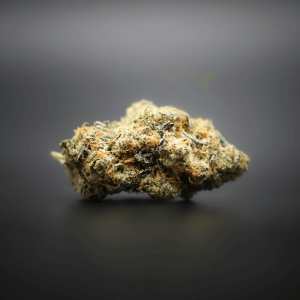
Cinex
Cinex is less universally known than Sour Diesel or Durban, but it gets consistent “daytime focus” love.
Why people like it for ADHD:
- uplifting, mood-friendly clarity
- can feel less edgy than some high-THC sativas
- people often report better task initiation
What to watch out for:
- still not a nighttime strain for most
- can increase restlessness if you overdo it
Best use cases:
- social productivity (calls, meetings, errands)
- light-to-medium work sessions
- “I need to function like a person today”
Terpene vibe (commonly):
- limonene (mood)
- pinene (clarity)
- caryophyllene (balance)
Best instruction:
Pair with a short to-do list. Not a long one. A short one. Give the strain one job, not twenty.
Extra notes for the “focus” category
If these strains make you:
- more anxious
- more scattered
- more talkative but less effective
Then your nervous system might prefer a CBD-forward strain or a calmer hybrid for productivity. ADHD focus is not always about more stimulation. Sometimes it’s about less internal noise.
This category is for ADHD that feels like:
- internal restlessness
- nonstop thinking
- physical agitation
- emotional reactivity
- “I cannot relax even when I’m tired”
Here, CBD-forward strains often shine, especially if THC tends to worsen your focus.
ACDC (high-CBD)
ACDC is famous for being high in CBD with very low THC. Many people find it calming without feeling “stoned,” which is exactly what some ADHD brains want.
Why people like it for ADHD:
- can reduce anxiety and body tension
- can quiet mental chatter
- often minimal impairment, especially compared to THC-heavy strains
What to watch out for:
- if you need motivation and drive, ACDC might feel too gentle alone
- effects can be subtle; subtle is the point, but some people dislike that
Best use cases:
- daytime calm without sedation
- social anxiety and irritability
- “I need to be functional but less on edge”
Terpene vibe (commonly):
- myrcene (relaxation)
- pinene (clear calm)
- caryophyllene (grounding)
Best instruction:
Use it as a baseline. Use it to smooth the day. Don’t wait until you’re already spinning.
Cannatonic (CBD balanced or CBD-leaning)
Cannatonic is often described as mellow, stabilizing, and anxiety-reducing, with a little more “presence” than ultra-low-THC CBD strains.
Why people like it for ADHD:
- can take the edge off racing thoughts
- may improve emotional regulation
- can help with calm focus when dosed carefully
What to watch out for:
- depending on the phenotype, THC may be higher than expected
- too much can become sleepy or foggy
Best use cases:
- afternoon reset
- calming down without knocking out
- easing into evening tasks without chaos
Terpene vibe (commonly):
- linalool (calm)
- caryophyllene (grounding)
- myrcene (relaxation)
Best instruction:
If your brain feels like a browser with 42 tabs open, Cannatonic is the “close all tabs” button. Not always, but often.
Harlequin (CBD-forward, functional)
Harlequin is a well-known CBD-rich strain often praised for staying functional while easing anxiety and tension.
Why people like it for ADHD:
- reduces stress response and irritability
- can support calm productivity
- less likely to trigger the “THC spiral” in sensitive users
What to watch out for:
- can feel underwhelming if you’re chasing a big mood shift
- some versions still carry enough THC to matter
Best use cases:
- daytime emotional regulation
- task follow-through when anxiety is the blocker
- social settings where you want calm, not couch-lock
Terpene vibe (commonly):
- pinene (clear head)
- myrcene (calm)
- caryophyllene (balance)
Best instruction:
Use it when you’re tense and avoidant. Your goal is not to “feel high.” Your goal is to do the dishes without resenting the dishes.
Extra notes for the “calm” category
If you’re using cannabis to reduce racing thoughts, do not accidentally create the opposite problem:
- calm body, distracted mind
- relaxed, but procrastinating harder
This is where time-of-day matching matters.
Combined type often looks like:
- understimulated and restless at the same time
- motivated in theory, blocked in practice
- anxiety when trying to focus
- spikes of productivity followed by crashes
These strains tend to be “middle path” options that can support both focus and emotional regulation.
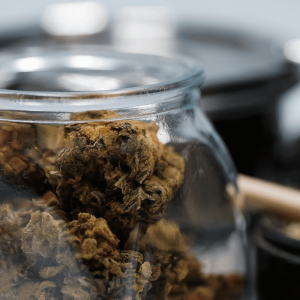
Blue Dream
Blue Dream is popular for a reason. Many people find it uplifting, mood-stabilizing, and functional at low doses.
Why people like it for ADHD:
- balanced mental lift with less edge
- mood-friendly, often reduces frustration
- can support creative productivity and general “day flow”
What to watch out for:
- it can still be distracting if you overdo it
- not ideal for strict analytical tasks for some users
Best use cases:
- creative work
- light-to-medium productivity
- weekend “get life together” sessions
Terpene vibe (commonly):
- myrcene (body ease)
- pinene (clarity)
- sometimes limonene (mood)
Best instruction:
Use it when you need momentum without intensity. And don’t keep re-dosing just because you “feel fine.” That’s how you go from productive to pleasantly useless.
Jack Herer
Jack Herer is often described as clear, upbeat, and focused, with enough lift to start tasks and enough balance to avoid spiraling, for some people.
Why people like it for ADHD:
- can increase alertness and motivation
- can feel mentally crisp at low doses
- often reported as “functional high”
What to watch out for:
- can be too stimulating for anxiety-prone users
- high doses can become scattered or edgy
Best use cases:
- daytime work blocks
- brainstorming that needs structure
- social productivity and errands
Terpene vibe (commonly):
- terpinolene (uplift)
- pinene (clarity)
- caryophyllene (balance)
Best instruction:
Use it with a timer. Set a 25-minute focus sprint. Start immediately. ADHD loves a beginning line.
A terpene-first way to shop (because strain names lie)
Dispensary strain names can be inconsistent. One “Blue Dream” can feel different from another “Blue Dream” depending on grower, harvest timing, and lab profile.
So shop by terpenes when you can.
If your goal is focus
Look for profiles that lean toward:
- pinene
- limonene
- moderate caryophyllene
Go easy on very high myrcene if it makes you sleepy.
If your goal is calm and quieting racing thoughts
Look for:
- linalool
- caryophyllene
- myrcene (if you tolerate it without becoming foggy)
If you want balanced productivity
Look for:
- pinene + caryophyllene
- limonene + caryophyllene
- modest myrcene that doesn’t dominate
And yes, this is still trial-and-error. But it’s smarter trial-and-error.
Practical tips to make cannabis actually useful for ADHD (and not just “a vibe”)
If you want cannabis to help you get things done, treat it like a tool. Not a mystery candy.
1) Start a strain journal (make it stupid simple)
Do not write a novel. Write a receipt.
Track:
- strain name + brand/grower
- THC/CBD % (or mg if edible)
- top terpenes if listed
- dose (how many puffs, what mg)
- time of day
- what you did
- results (focus, calm, anxiety, motivation, sleep)
After 2–3 weeks, patterns show up. Real patterns. Not “I think this one helped.”
2) Match strain to time of day (stop fighting your own biology)
Use energizing strains earlier, calming strains later.
A simple framework:
- Morning: focus strains (microdose)
- Midday: balanced hybrids or CBD-forward for steady function
- Evening: calming terpenes, lower THC, or CBD-heavy options
If you use a heavy strain at 10 a.m., do not act surprised when your to-do list becomes a historical document.
3) Use “activation pairing” (do the task immediately)
ADHD brains are context-dependent. Cannabis can amplify that.
So pair your dose with the start of the task:
- Take one puff.
- Stand up.
- Open the document.
- Start the timer.
Do not sit down and “wait for it to kick in” while holding your phone. That’s how you end up researching the history of medieval spoons.
4) Avoid novelty traps
Some strains make everything feel interesting. That sounds helpful, until your brain decides that reorganizing your camera roll is now your life’s calling.
If you’re using cannabis for productivity:
- work from a list
- work in a clean environment
- reduce distractions before dosing
Make the right thing the easiest thing.
5) Keep caffeine in check
Cannabis plus caffeine can be great or awful.
If you’re anxiety-prone:
- high-THC + coffee can become “productive panic”
- consider CBD-forward strains or lower THC
- reduce caffeine when testing new strains
6) Don’t chase the feeling, chase the function
If you need more and more THC to get the same “focus,” you’re not improving focus. You’re building tolerance.
Function first:
- Can you start?
- Can you sustain?
- Can you finish?
- Can you transition to the next task?
If the answer is no, lower the dose or change the profile.
Common mistakes people make with cannabis and ADHD (learn from their chaos)
Mistake 1: Thinking more THC = more focus
Nope. Not how biphasic effects work.
More THC often means:
- worse working memory
- more distractibility
- more anxiety
- less follow-through
Mistake 2: Using the wrong delivery method for the goal
If you want focus:
- inhalation is usually easier to dial in
If you want long calm or sleep:
- edibles can make sense
Don’t use a slow, unpredictable method for a precision task. That’s like using a shovel to apply eyeliner.
Mistake 3: Testing strains when your day is already on fire
If you are stressed, sleep-deprived, hungry, and behind on deadlines, you are not “testing a strain.” You are gambling.
Test on low-stakes days first.
Mistake 4: Ignoring CBD
Some ADHD brains do better when THC is low and CBD is present, especially if anxiety and racing thoughts are big parts of the picture.
CBD-forward strains can be the difference between:
- calm focus
- and
- focus that gets mugged by panic
What about high-THC strains for ADHD?
Some people with ADHD genuinely prefer higher-THC strains and feel more normal on them. That happens.
But if you’re reading this because you want focus, calm, and getting things done, high THC is a “handle with care” category.
If you go high THC:
- lower the dose even more than you think
- avoid stacking with edibles
- avoid re-dosing out of habit
- choose strains with supportive terpenes like pinene or caryophyllene
And be honest: if your focus improves but your memory collapses, that’s not a win. That’s productivity cosplay.
Safety and “don’t do this” notes (because someone has to be the adult)
- If you have a history of psychosis or schizophrenia in yourself or close family, talk to a clinician before using THC.
- If cannabis increases your anxiety, paranoia, or panic, stop and reassess dose and cannabinoid ratio.
- Do not drive or operate machinery while impaired.
- If you’re on ADHD medication, SSRIs, or other psychiatric meds, discuss cannabis use with a qualified professional. Interactions are real, and your prescriber should know what you’re doing.
- If you’re pregnant or breastfeeding, avoid cannabis.
Also, buy lab-tested products from legal sources. You’re trying to improve executive function, not audition for a contaminants documentary.
If your main issue is focus and initiation, consider microdosing strains commonly reported as energizing and clear:
- Sour Diesel
- Durban Poison
- Cinex
If your main issue is racing thoughts and hyperactivity, start with CBD-forward calmers:
- ACDC
- Cannatonic
- Harlequin
If you have combined type ADHD and need balance:
- Blue Dream
- Jack Herer
Then use terpenes to refine:
- pinene for clarity and memory support
- limonene for mood and motivation
- linalool for calm and nervous system relief
And then follow the rule that makes it all work: Microdose. Microdose. Microdose.
Final word (the honest one)
Cannabis and ADHD is a high-interest topic because a lot of adults are quietly experimenting and many report real symptom relief. The early research and the endocannabinoid-dopamine connection make the idea plausible. The anecdotal reports make it hard to ignore.
But cannabis is not a shortcut. It’s a tool. Tools require technique.
So do it right:
- pick strains based on your ADHD pattern
- track what happens
- match time of day
- avoid edible roulette for focus
- keep THC low enough to stay sharp
You’re not trying to get high.
You’re trying to get your life back on task.
FAQs (Frequently Asked Questions)
1. Can cannabis effectively treat ADHD symptoms?
While cannabis is not a guaranteed treatment for ADHD, many adults report symptom relief. In a recent study, over 90% of adults using cannabis for ADHD symptoms experienced some relief. However, this does not prove efficacy, and more research is needed.
2. How does cannabis interact with the brain chemistry related to ADHD?
ADHD involves dopamine and norepinephrine dysregulation affecting attention, motivation, impulse control, and task initiation. The endocannabinoid system (ECS), influenced by cannabis compounds, helps regulate neurotransmitters including dopamine. This interaction may indirectly improve focus and calm in some individuals.
3. Why do THC effects vary so much for people with ADHD?
THC has biphasic effects: low doses can enhance focus and mood, while high doses may increase distractibility, anxiety, and memory issues. The dose determines whether cannabis helps with tasks or causes mental fog and distraction.
4. What is microdosing and why is it important for using cannabis with ADHD?
Microdosing means taking small, consistent doses that produce subtle effects without impairing function. For ADHD support, microdosing is essential to achieve improved focus and follow-through without causing mental fog or distraction.
5. Which cannabis strains or components are best for managing ADHD symptoms?
There is no one-size-fits-all strain. People seek strains tailored to their specific ADHD patterns at different times of day. Terpenes play a significant role in shaping effects, and both THC and CBD levels influence outcomes differently depending on individual response.
6. How can I know if my cannabis dose is right for managing my ADHD symptoms?
A proper microdose allows you to start tasks easily, experience quieter mind activity, feel more interested in boring tasks, and hold thoughts long enough to complete steps. If you feel mentally floaty, forgetful, or distracted by multiple tasks, your dose is likely too high.
Jenna Renz

Jenna is a California-based creative copywriter who’s been lucky enough to have worked with a diverse range of clients before settling into the cannabis industry to explore her two greatest passions: writing and weed.