Rewards


Best strains for depression can feel like a life raft when your mood is stuck in low tide, but let’s get one thing straight: cannabis is not a replacement for professional mental health care. It can be a supportive tool for some people, sometimes, in the right dose, in the right context. And other times it can make things worse. So we’re going to do this responsibly, with a sensitive tone, clear guardrails, and a buying guide that actually helps you choose.
If you’re dealing with depression symptoms, consider talking to a licensed clinician, especially if you have thoughts of self-harm, worsening anxiety, panic, paranoia, or you’re using cannabis to avoid daily functioning. Cannabis can interact with medications, amplify anxiety in some users, and worsen motivation in others. Use it like a supplement to a real plan, not the plan.
With that said, let’s talk about what people are actually searching for: strains that tend to feel more uplifting, calming, or sleep-friendly, and how to pick them based on your symptom pattern.
First, the mood science you actually need (without the lecture)
Recommended Products

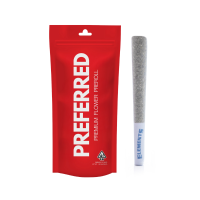
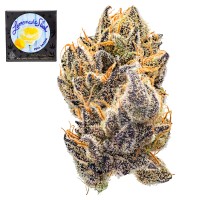
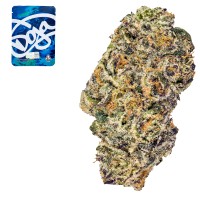
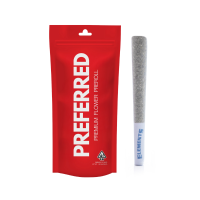
Depression is complex. Cannabis is also complex. Your brain is not a vending machine. Insert strain, receive happiness. If only.
Here’s the useful framework.
The ECS-mood connection (your body’s “balance system”)
Cannabis works largely through the endocannabinoid system (ECS), a network involved in mood regulation, stress response, sleep, appetite, and reward processing. Your ECS helps your body maintain equilibrium. When it’s out of whack, your mood can follow.
Cannabinoids like THC and CBD interact with that system differently. For more detailed information on how these cannabinoids function and their potential effects on mental health conditions such as depression, it’s beneficial to refer to credible sources such as Health Canada’s guidelines, which provide comprehensive insights into the use of cannabis and cannabinoids in medical contexts. This is why two people can try the same strain and report completely different outcomes.
CBD and serotonin (the calm, steady hand)
CBD does not intoxicate like THC. Instead, it has indirect effects that may influence mood and anxiety for some people. One commonly discussed pathway is CBD’s relationship with serotonin signaling, particularly the 5-HT1A receptor, which is involved in anxiety and mood regulation.
Translation: CBD-heavy or balanced options can feel more “leveling” for some people, especially if your depression is tied to anxious rumination.
THC and dopamine (the short-term boost, the long-term question)
THC can create a short-term lift for some users because it can increase dopamine release in reward pathways. That may temporarily improve mood, make music sound better, and convince you that folding laundry is a heroic quest.
But here’s the catch: that lift is often dose-dependent and time-dependent. Higher doses can increase anxiety, impair sleep quality, or leave you foggy and flat the next day.
The biphasic dose-response (the “this was great… until it wasn’t” effect)
Cannabis has a biphasic effect for many people:
- Low to moderate doses may feel uplifting, calming, or functional.
- High doses can swing the other way: increased anxiety, lethargy, racing thoughts, paranoia, or emotional blunting.
This is why the “strongest strain” is rarely the “best strain.” More THC is not more happiness. More THC is just more THC.
How to choose a strain for depression (use symptoms, not hype)
Instead of shopping by random strain lists, shop by what you actually feel day to day. Depression often shows up in clusters like:
- Fatigue, low motivation, brain fog
- Anxiety-linked depression (rumination, tension, stress loops)
- Evening crash, insomnia, or inability to wind down
We’ll match strains to those clusters, then show you how to dose and track results so you’re not guessing your way through your own brain.
Also, quick reality check: strain names are not a perfect science. The same “Blue Dream” from two different growers can feel different due to genetics, terpene profiles, cultivation, and harvest timing. So treat this as a smart starting point, not a guaranteed outcome.
Terpene mood-mapping (the underrated cheat code)
Cannabinoids matter, but terpenes often shape the “feel” more than people expect. If you want a practical buying guide, start reading labels for terpenes and use them as your mood compass.
Here are the big three for mood support:
Limonene: uplift and brightness
Often described as citrusy. Commonly associated with a more upbeat, elevated vibe.
- Good fit for: low mood, heaviness, “everything feels dull”
- Watch-outs: in high-THC products, “uplift” can turn into “too much” fast
Pinene: clarity and focus
Smells like pine/forest. Often associated with clearer-headed energy.
- Good fit for: brain fog, scattered attention, functional daytime use
- Watch-outs: if you’re sensitive to stimulation, pair with lower THC or balanced CBD
Linalool: calm and decompression
Floral, lavender-like. Commonly associated with soothing, body-calming effects.
- Good fit for: evening wind-down, tension, stress-related sleep issues
- Watch-outs: can feel sedating, especially combined with heavier strains
When you’re ordering, look for product descriptions that mention these terpenes, and when possible, check lab results. If the label says “citrus + uplifting,” you’re often looking at limonene. If it says “pine + clear,” you’re in pinene territory. If it says “lavender + soothing,” you’ve found linalool’s calling card.
Best strains for depression symptom cluster: fatigue and low motivation (daytime)
This category is for the “I want to do things, but my brain says no” version of depression. You’re not chasing euphoria here. You’re chasing a gentle nudge toward momentum.
These strains are often described as more energizing, more functional, and more mood-lifting at low doses.
1) Jack Herer (classic uplift with mental clarity)
Jack Herer is frequently reported as an upbeat, clear-headed strain that can feel motivating without being too heavy. Many people like it for daytime use because it can feel mentally “clean,” especially at modest doses.
- Best for: low motivation, mild fatigue, getting moving
- Terpene vibe to look for: pinene and limonene
- How to use it: take one small inhale, wait, then decide. Don’t freestyle your way into a nap.
Ordering tip: If you see Jack Herer labeled as a “focus” or “creative” strain, that’s usually the lane you want. Avoid ultra-high THC versions if you’re prone to anxiety.
2) Green Crack (high-energy, high-risk if you overdo it)
Yes, the name is terrible. No, you do not need to announce it to your group chat. But as a daytime strain, Green Crack is known for a sharp, energetic lift that some people find helpful for fatigue and mental sluggishness.
- Best for: fatigue, low drive, daytime chores, “I need to function”
- Terpene vibe to look for: often limonene, sometimes pinene
- Watch-outs: can feel edgy at higher doses, especially for anxiety-prone users
Use the toddler rule: tiny dose, slow pace, no sudden movements.
3) Sour Diesel (mood lift with a fast mental onset)
Sour Diesel is often described as cerebral and energizing, with a quicker onset that some users find helpful for snapping out of heavy inertia.
- Best for: low mood with sluggishness, daytime social ease
- Terpene vibe to look for: limonene with supporting terpenes that keep it “bright”
- Watch-outs: can become too racy if you overshoot your dose
Practical move: if you tend to get anxious, consider microdosing Sour Diesel rather than taking a full session. You want a spark, not a wildfire.
Best strains for depression symptom cluster: anxiety-linked depression (balanced and friendly)
If your depression includes anxiety, rumination, tension, or that charming “I’m exhausted but my brain won’t shut up” feeling, your best bet is often a balanced strain. According to research, such strains can significantly help in managing anxiety-linked depression symptoms, making them a viable option for many individuals suffering from this condition.
That usually means:
- moderate THC, not maxed-out THC
- some CBD in the mix, if possible
- terpenes that soothe rather than spike
4) Blue Dream (the “popular for a reason” middle path)
Blue Dream is widely considered a balanced, approachable strain. Many users describe it as mood-lifting but not overly intense, with a calm baseline that can make it easier to stay functional.
- Best for: anxious depression, social discomfort, daytime-to-afternoon use
- Terpene vibe to look for: often pinene (clarity) plus a softer, smoother profile
- Watch-outs: potency varies a lot by producer, so check THC percentage
Buying tip: If you can choose, consider Blue Dream in a lower-to-moderate THC format, or look for a “balanced” version if your dispensary carries mixed-ratio options.
5) Pineapple Express (brighter mood without the heavyweight feel)
Pineapple Express is often described as cheerful, uplifting, and mentally light. It’s a common pick for people who want a mood shift without feeling glued to the couch.
- Best for: mild-to-moderate low mood with stress, daytime uplift
- Terpene vibe to look for: often limonene (citrus uplift)
- Watch-outs: can still feel stimulating if THC is high
Use case: This is the “I want to feel more like myself” strain for some people. Keep the dose modest and see how your mind responds.
Best strains for depression symptom cluster: evening wind-down (calm, comfort, sleep support)
Evenings can be brutal with depression. You finally stop moving and your thoughts start auditioning for a horror anthology. Or you’re tired all day and then wired at night because your nervous system loves irony.
These strains lean more calming and body-settling. They’re often used for decompression, appetite support, and sleep, but the dose matters. Too much THC can disrupt sleep quality for some users even if it knocks you out.
6) Northern Lights (classic, soothing, no drama)
Northern Lights is one of the go-to evening strains for relaxation. Many users report a quieting of the mind and a full-body exhale.
- Best for: evening anxiety, tension, trouble winding down
- Terpene vibe to look for: calming terpenes, often including linalool notes in descriptions
- Watch-outs: can be sedating, so plan accordingly
Do this, not that: take it when you’re done being productive. This is not your “quick afternoon hit” unless your afternoon plans include becoming a blanket burrito.
7) Girl Scout Cookies (GSC) (comforting, euphoric, can be strong)
GSC is known for its combination of mood lift and body relaxation. Some people find it helps with evening stress and negative thought spirals. Others find it too potent. Both can be true.
- Best for: evening mood support, stress release, appetite, winding down
- Terpene vibe to look for: a soothing profile, sometimes described as sweet, earthy, relaxing
- Watch-outs: can run high in THC; high doses may increase anxiety in sensitive users
Ordering tip: If you’re new or anxious-prone, look for GSC with moderate THC, or consider taking one small puff and stopping. Yes, stop. That’s the hard part.
“Start low, go slow”: a dosing framework that actually prevents bad nights
If you ignore everything else, do not ignore this. Dose is the difference between “I feel lighter” and “I have become a question mark.”
Step 1: Pick your delivery method wisely
Different forms hit differently.
- Inhalation (flower, vape): fast onset (minutes), shorter duration (often 1 to 3 hours). Easier to titrate slowly.
- Edibles: slow onset (30 minutes to 2 hours), long duration (often 4 to 8+ hours). Easier to overdo. Overdoing is not character building.
If you’re experimenting for mood support, inhalation or low-dose sublingual products are often easier to control than edibles.
Step 2: Use a microdose as your “test dose”
For inhalation:
- Take one small puff
- Wait 10 to 15 minutes
- Reassess
For edibles:
- Start with 1 to 2.5 mg THC (especially if you’re sensitive)
- Wait at least 2 hours before taking more
Yes, waiting is annoying. Do it anyway. Your future self will thank you.
Step 3: Find your “functional sweet spot”
Your goal is not to feel “high.” Your goal is to feel better able to do life.
Stop increasing the dose when you reach:
- slightly improved mood
- reduced rumination
- less physical tension
- better ability to initiate tasks
- without brain fog or anxiety spikes
Repeat: stop. Increasing past the sweet spot is how people end up staring at the wall, negotiating with their heartbeat.
Step 4: Respect the biphasic effect
If you feel great at a small dose, do not assume more will be greater.
Cannabis is not a motivational quote. It will not “give you what you can handle.” It will give you what you took.
Build your own strain journal (so you stop guessing)
Depression already messes with memory and motivation. Don’t rely on vibes alone. Track your results like a mildly obsessive scientist. You’re not being dramatic. You’re being accurate.
Use this strain journal template (copy/paste it into Notes)
Date + Time:
Strain / Product:
Form: flower / vape / edible / tincture
THC % or mg:
CBD % or mg:
Terpenes (if listed): limonene / pinene / linalool / other
Dose: (example: 1 puff, 2.5 mg edible)
Reason I used it: fatigue / anxiety / sleep / mood dip
Onset time:
Effects (0 to 10): mood lift, calm, focus, body relaxation
Side effects: dry mouth, anxiety, racing thoughts, sedation, headache
Function check: did I do what I needed to do?
Sleep impact: easier to fall asleep? stay asleep? groggy next day?
Would I use again: yes / no / lower dose / different time of day
Do this for two weeks and you’ll learn more about your personal response than any generic strain list can tell you.
How to order smart (and avoid buying the wrong “version” of a strain)
Online menus and delivery platforms make it easy to order, but they also make it easy to order nonsense. Use this checklist before you click “Add to cart.”
Check the cannabinoid numbers
- If anxiety is part of your depression, consider moderate THC or THC:CBD balanced products.
- If fatigue is the big issue, avoid heavy high-THC indicas during the day unless you enjoy naps you didn’t schedule.
Look for terpene clues in the description
- Want uplift? Look for citrus, lemon, orange, “bright,” “energizing” (often limonene).
- Want clarity? Look for pine, fresh, “focused,” “clear-headed” (often pinene).
- Want calm? Look for lavender, floral, “soothing,” “relaxing” (often linalool).
Don’t chase THC like it’s a high score
High THC can be useful for some people, but it’s also the easiest way to trigger anxiety, dissociation, or next-day fog. If your goal is mood support and functionality, moderate potency is often the smarter buy.
Choose smaller quantities when testing
Buy the smallest amount you can. Your “perfect strain” might be a one-hit wonder, and that’s fine. You’re experimenting, not stocking a bunker.
Important mental health disclaimers (read them, even if you skim everything else)
- If you have severe depression, suicidal thoughts, or worsening symptoms, seek professional help immediately. If you’re in the U.S., you can call or text 988 for the Suicide & Crisis Lifeline.
- Cannabis may worsen anxiety, paranoia, panic, or motivation for some people, especially at higher THC doses.
- If you have a history of psychosis, bipolar disorder, or mania, talk to a clinician before using THC products. THC can be destabilizing for some individuals.
- Cannabis can interact with medications, including some antidepressants and anxiolytics. Ask a pharmacist or clinician if you’re unsure.
- If you’re pregnant, breastfeeding, or underage, avoid cannabis unless guided by a qualified medical professional in your jurisdiction.
Use cannabis as a tool, not a trap. If you find yourself needing more and more to feel okay, that’s not “tolerance.” That’s a signal.
Quick picks: which strain for which depression pattern?
Use this as your “standing in the online menu” cheat sheet.
If you feel tired, unmotivated, foggy
- Jack Herer
- Green Crack
- Sour Diesel
Keep doses low. Stay functional. Do not turn “uplift” into “overcaffeinated brain.”
If your depression is tangled up with anxiety
- Blue Dream
- Pineapple Express
Look for balanced effects, moderate THC, and terpene profiles that don’t feel too sharp.
If evenings are hard and sleep is messy
- Northern Lights
- GSC (Girl Scout Cookies)
Start small. Give it time. Don’t assume sedation equals good sleep.
Final word: buy carefully, dose carefully, track everything
The best strains for depression are the ones that match your symptom pattern, your sensitivity, and your real-life responsibilities. Use terpenes as your compass. Respect the biphasic effect. Start low and go slow. Then go slower than that.
Order small. Test deliberately. Keep a strain journal like your mood depends on it, because sometimes it does.
And if cannabis isn’t helping, stop. Switch strategies. Talk to a professional. There is no prize for powering through with the wrong tool.
FAQs (Frequently Asked Questions)
Can cannabis replace professional mental health care for depression?
No, cannabis should not be considered a replacement for professional mental health care. It can sometimes serve as a supportive tool in the right dose and context, but it is essential to consult a licensed clinician, especially if you experience severe symptoms like self-harm thoughts, worsening anxiety, or panic.
How does cannabis interact with the endocannabinoid system (ECS) to affect mood?
Cannabis works through the endocannabinoid system (ECS), which regulates mood, stress response, sleep, appetite, and reward processing. Cannabinoids like THC and CBD interact differently with the ECS, influencing mood regulation in complex ways that vary between individuals.
What roles do CBD and THC play in managing depression symptoms?
CBD is non-intoxicating and may help regulate mood and anxiety by influencing serotonin signaling pathways, often providing a leveling effect especially for anxiety-linked depression. THC can produce short-term dopamine boosts that temporarily uplift mood but may cause negative effects like increased anxiety or lethargy at higher doses or over time.
What is the biphasic dose-response effect of cannabis on mood?
The biphasic dose-response means that low to moderate doses of cannabis may feel uplifting, calming, or functional, while high doses can lead to increased anxiety, lethargy, paranoia, or emotional blunting. Therefore, more THC does not necessarily mean more happiness; dosing is crucial.
How should I choose a cannabis strain for depression based on my symptoms?
Instead of relying on popular strain names, select strains based on your specific symptom clusters such as fatigue and low motivation, anxiety-linked depression with rumination and stress loops, or evening insomnia and inability to wind down. Tracking your response to different strains and doses can help tailor your choice effectively.
What role do terpenes play in selecting cannabis strains for mood support?
Terpenes significantly influence the ‘feel’ of a cannabis strain. Key terpenes include limonene (uplifting and bright), pinene (clarity and focus), and linalool (calm and decompression). Reading terpene profiles on labels can guide you toward strains that better match your mood support needs.
Jenna Renz

Jenna is a California-based creative copywriter who’s been lucky enough to have worked with a diverse range of clients before settling into the cannabis industry to explore her two greatest passions: writing and weed.