Rewards


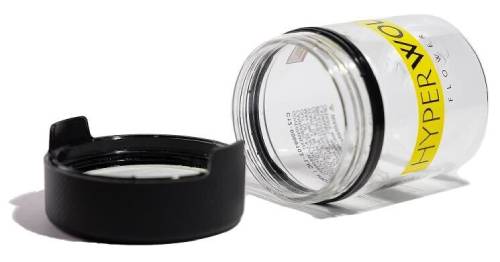

If you need a weed cost per gram guide, we’ve got you covered.
Buying cannabis should not feel like doing your taxes. Yet here we are, staring at menus, squinting at percentages, and wondering why the “premium eighth” costs the same as a small appliance.
Good news: you can spot real value fast. Do two quick calculations, apply a few terpene “bands,” then score the deal like you mean it.
This guide gives you a practical, repeatable framework:
- Cost per gram to compare apples to apples (and eighths to ounces).
- Terps per dollar to measure aroma and intensity per unit of money.
- Terp % bands so you know what “good” looks like for each price tier.
- A simple Deal Score table you can use in-store, online, or while your friend is still monologuing about “the vibes.”
And yes, we’ll use terps as a value lens because top-shelf often sells terp intensity, not just THC.
To simplify your cannabis purchasing experience and help you score better deals, consider using tools like those offered by Hyperwolf. Their platform provides valuable insights and resources that can assist you in making informed decisions while buying cannabis.
Why “Best Value” Is Not the Same as “Cheapest”
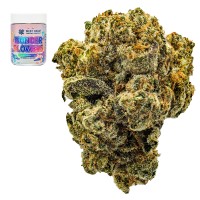

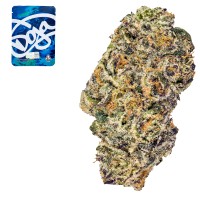
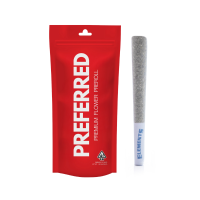


Cheapest is easy. Best value is smarter.
Best value means you get the most of what you actually care about for your money. For most people, that usually comes down to:
- Freshness
- Flavor and aroma
- Effect consistency
- Smoothness
- Bag appeal (sure, we’re human)
THC can matter, but it is not the whole story. If you have ever tried a 21% flower that hit harder than a 30% one, congratulations. You have met the rest of the plant.
That “rest of the plant” is where terpenes become a useful lens.
Step 1: Cost Per Gram (CPG), the Only Math You Need at First
Menus love to distract you with package sizes: 1g, 3.5g, 7g, 14g, 28g. Some stores even toss in “5g smalls” like we’re in a candy shop.
Ignore the chaos. Normalize everything to cost per gram.
Cost Per Gram Formula
Cost per gram (CPG) = Total price ÷ total grams
That’s it.
Quick examples
- $35 eighth (3.5g)
- CPG = 35 ÷ 3.5 = $10.00/g
- $90 half (14g)
- CPG = 90 ÷ 14 = $6.43/g
- $120 ounce (28g)
- CPG = 120 ÷ 28 = $4.29/g
Now you can compare any option on the menu in a clean, ruthless way.
A simple CPG cheat sheet (common weights)
- 1g package: divide the price by 1 to get CPG
- Eighth (3.5g): divide the price by 3.5
- Quarter (7g): divide the price by 7
- Half (14g): divide the price by 14
- Ounce (28g): divide the price by 28
Do this first. Always. Cost per gram is the foundation.
But cost per gram alone has a problem.
A $4/g flower can be a steal or a sleepy disappointment. That’s where terps come in.
Step 2: Terp % Bands (So You Know What You’re Looking At)
Terpene percentage (often listed as Total Terpenes %) is not a perfect proxy for quality, but it is a surprisingly useful signal when you use it correctly.
Use bands, not absolutes.
Because comparing a 0.6% terp bargain ounce to a 2.8% terp top-shelf eighth is like comparing boxed wine to a cocktail bar. Both are “alcohol.” One is also regret.
Terp % bands you can actually use
These are practical, shopper-friendly bands for flower:
- Under 1.0%: Low (often muted, dry, or older)
- 1.0% to 1.5%: Fair (decent, can be solid budget value)
- 1.5% to 2.0%: Good (noticeable aroma, more consistent experience)
- 2.0% to 3.0%: High (loud, flavorful, typically “premium” territory)
- 3.0%+: Very high (rare; can be incredible, can also be hype)
Repetition for emphasis: Bands, not absolutes. Bands, not absolutes.
Step 3: “Terps Per Dollar” (TPD), a Value Metric That Actually Helps
Now we combine price and terp intensity into one simple value metric.
Terps Per Dollar Formula (the simple version)
Terps per dollar (TPD) = Total terp % ÷ total price
Example:
- Flower: 2.2% terps
- Price: $44
TPD = 2.2 ÷ 44 = 0.05 terp-% per $
This number is small. That’s fine. You are comparing options, not admiring the decimal.
A more “human” version (recommended)
Multiply by 100 to make it readable:
TPD(100) = (Total terp % ÷ price) × 100
Using the same example:
TPD(100) = (2.2 ÷ 44) × 100 = 5.0
Now you have a nice, comparable score-like number.
Why this works
- Cost per gram tells you how expensive the product is.
- Terp % tells you how intense it might be.
- Terps per dollar tells you how much intensity you get for your money.
Top-shelf often charges for terp intensity. Great. Use that against the menu.
The Framework: Cost/Gram + Terp Bands + Deal Scoring
Here’s the whole “best value buying” framework in one place:
- Calculate cost per gram (CPG).
- Check terp % band (low, fair, good, high, very high).
- Calculate Terps Per Dollar (TPD(100)).
- Apply the Deal Score to decide if it’s a pass, a maybe, or a “buy two and pretend it was an accident.”
Let’s make the scoring simple.
The Deal Score (Simple Table You Can Use Anywhere)
This Deal Score is meant to be fast, not academically perfect. It rewards:
- Lower cost per gram
- Higher terp bands
- Better “terps per dollar”
Step A: Give points for cost per gram
Cost per gram (CPG) points:
- $5 per gram or less: 5 points
- $5 to $7 per gram: 4 points
- $7 to $9 per gram: 3 points
- $9 to $11 per gram: 2 points
- $11 to $13 per gram: 1 point
- Over $13 per gram: 0 points
Step B: Give points for total terp % band
Total Terp % Band Points
- 3.0% or higher: 5 points
- 2.0–2.99%: 4 points
- 1.5–1.99%: 3 points
- 1.0–1.49%: 2 points
- 0.5–0.99%: 1 point
- Less than 0.5%: 0 points
Step C: Give points for Terps Per Dollar (TPD(100))
Calculate: TPD(100) = (terp % ÷ price) × 100
In this formula, the terp % refers to the percentage of cannabis terpenes, which can significantly influence the flavor and aroma of the product. The price is the cost of the product. By dividing the terp % by the price, we get a value that represents how much value we are getting in terms of terpenes for each dollar spent. This is then multiplied by 100 to give us a more manageable number.
TPD(100) Points System
- TPD(100) of 6.0 or higher: 5 points
- TPD(100) from 4.5 to 5.99: 4 points
- TPD(100) from 3.0 to 4.49: 3 points
- TPD(100) from 1.5 to 2.99: 2 points
- TPD(100) from 0.5 to 1.49: 1 point
- TPD(100) less than 0.5: 0 points
This scoring system allows us to assess the value for money we are getting from our cannabis purchase based on its terpene content.
Total Deal Score
Deal Score = CPG points + Terp points + TPD points
Max = 15 points.
Interpretation:
- 13–15: Excellent value (rare, buy-worthy)
- 10–12: Strong value (good pick)
- 7–9: Fair (only if you like the strain/brand)
- 0–6: Overpriced or underperforming (walk away)
Print it mentally. Use it repeatedly. Repetition works.
Worked Examples (So This Isn’t Just Theory)
Example 1: Budget ounce with low terps
- Price: $120
- Weight: 28g
- Total terps: 0.9%
CPG = 120 ÷ 28 = $4.29/g → 5 points
Terps = 0.9% → 1 point
TPD(100) = (0.9 ÷ 120) × 100 = 0.75 → 1 point
Deal Score = 5 + 1 + 1 = 7 (Fair)
This is “cheap grams,” not necessarily “best value.” It might be fine for rolling, cooking, or daytime utility. But don’t expect fireworks.
Example 2: Mid-tier quarter that’s quietly loud
- Price: $55
- Weight: 7g
- Total terps: 2.1%
CPG = 55 ÷ 7 = $7.86/g → 3 points
Terps = 2.1% → 4 points
TPD(100) = (2.1 ÷ 55) × 100 = 3.82 → 3 points
Deal Score = 3 + 4 + 3 = 10 (Strong value)
That’s a good buy. Not the cheapest, but you are paying for intensity and getting it.
Example 3: Top-shelf eighth with “premium tax”
- Price: $58
- Weight: 3.5g
- Total terps: 2.6%
CPG = 58 ÷ 3.5 = $16.57/g → 0 points
Terps = 2.6% → 4 points
TPD(100) = (2.6 ÷ 58) × 100 = 4.48 → 3 points
Deal Score = 0 + 4 + 3 = 7 (Fair)
Is it bad? Not necessarily. It could be incredible flower. But it’s not “best value.” It’s “treat yourself” territory, and you should admit that out loud.
How to Use Terps as a Value Lens (Without Getting Weird About It)
Do this:
- Pick your price tier (budget, mid, premium).
- Demand an appropriate terp band for that tier.
- Use TPD to find the sneaky winners inside the tier.
Practical terp targets by tier (rule-of-thumb)
- Budget flower: aim for 1.0%+ terps if possible
- Mid-tier: aim for 1.5%+
- Premium/top-shelf: expect 2.0%+ (or at least undeniable nose and freshness)
If a “premium” jar is sitting at 1.1% terps, you are not buying premium. You are buying marketing.

The Biggest “Value” Traps (Avoid These)
Trap 1: “High THC” as a value claim
High THC can be great. It can also be harsh, flat, or one-dimensional.
Use THC as a descriptor, not a scoreboard.
Trap 2: Ignoring package size quality differences
An ounce can be a deal. It can also be 28 grams of “I guess this is my life now.”
If you have not tried the brand or batch, consider smaller sizes first.
Trap 3: Not checking harvest/package dates
Freshness matters for aroma, flavor, and perceived potency.
If the product is old enough to have memories, price should reflect that.
Trap 4: “Smalls” are always cheaper for a reason
Smaller buds can be excellent value, but they can also be more exposed to handling and dryness depending on packaging.
Want more on this angle? Read:
Best Value Buying Playbooks (Pick One and Stick to It)
Playbook A: The Budget Buyer (maximize quantity, avoid sadness)
- Target ≤ $6/g
- Insist on ≥ 1.0% terps when you can
- Prioritize freshness and decent trim
- Use the Deal Score to dodge low-terp “dead” flower
Playbook B: The Balanced Buyer (best overall experience per dollar)
- Target $6–$10/g
- Hunt for 1.5–2.5% terps
- Use TPD(100) to find mid-tier jars that punch above their price
Playbook C: The Top-Shelf Hunter (pay for intensity, not hype)
- Accept higher CPG, but demand 2.0%+ terps and strong freshness
- Treat anything under 1.5% terps as a red flag unless the nose proves otherwise
- Use TPD to check if the “premium tax” is at least somewhat justified
A Quick Note on What Terp % Does Not Tell You
Terp % is helpful. It is not magic.
It does not reliably tell you:
- Whether you will personally like the flavor
- Whether the effect will be energizing or sedating
- Whether it will be smooth for your lungs
- Whether the cure is perfect
Also, labs vary. Reported terps can fluctuate based on testing protocols, storage, and batch handling. Use terp % as a filter, then let your senses and trusted brands make the final call.
The Mini Checklist (Use This Before You Buy)
Do this in order:
- Calculate CPG.
- Check terp % band.
- Calculate TPD(100).
- Score it.
- Check harvest/package date.
- If possible: smell it (or buy small first).
Repetition time: Calculate. Check. Score. Decide.
FAQ: Weed Cost Per Gram Guide
What is a good cost per gram for flower?
It depends on your market, but many shoppers consider $5–$9/g the common “value zone.” Below that can be great or questionable. Above that should deliver clear improvements in freshness, cure, and terp intensity.
What is a good terp percentage for flower?
As a practical guide:
- 1.5%+ is usually “good”
- 2.0%+ is often “high” and more “premium”
- 3.0%+ is uncommon and can be exceptional
How do I calculate terps per dollar?
Use:
- TPD(100) = (Total terp % ÷ price) × 100
Compare that number across products. Higher means more terp intensity per dollar.
Is higher terp percentage always better?
Not always. Very high terp numbers can be amazing, but your preference matters. Some terp profiles may be too sharp, too gassy, or too floral for your taste. Also, freshness and cure can make a “lower terp %” jar smell better than a higher one.
Should I ignore THC when shopping for value?
No. Just don’t worship it. Use THC as one data point, then lean on freshness + terp bands + terps per dollar to find better overall value.
Are small buds (“smalls”) better value?
Often, yes. Smalls can deliver similar potency and terp profiles for less money, but packaging and dryness matter. If you want to go deeper, check:
What’s the fastest way to spot a bad deal?
If it has:
- High CPG (expensive per gram),
- Low terps (under ~1.0% for flower),
- and old dates, it is usually a pass unless you know the brand is consistently excellent.
Wrap Up: Buy With Math, Not With Hope
Do not buy on vibes alone. Vibes are how menus win.
Instead:
- Normalize price with cost per gram.
- Judge intensity with terp % bands.
- Measure value with terps per dollar.
- Use the Deal Score to make the call quickly and consistently.
Then, when you find a genuinely great deal, do what any responsible adult would do.
Buy it again before it disappears.
Jenna Renz

Jenna is a California-based creative copywriter who’s been lucky enough to have worked with a diverse range of clients before settling into the cannabis industry to explore her two greatest passions: writing and weed.